All Nonfiction
- Bullying
- Books
- Academic
- Author Interviews
- Celebrity interviews
- College Articles
- College Essays
- Educator of the Year
- Heroes
- Interviews
- Memoir
- Personal Experience
- Sports
- Travel & Culture
All Opinions
- Bullying
- Current Events / Politics
- Discrimination
- Drugs / Alcohol / Smoking
- Entertainment / Celebrities
- Environment
- Love / Relationships
- Movies / Music / TV
- Pop Culture / Trends
- School / College
- Social Issues / Civics
- Spirituality / Religion
- Sports / Hobbies
All Hot Topics
- Bullying
- Community Service
- Environment
- Health
- Letters to the Editor
- Pride & Prejudice
- What Matters
- Back
Summer Guide
- Program Links
- Program Reviews
- Back
College Guide
- College Links
- College Reviews
- College Essays
- College Articles
- Back
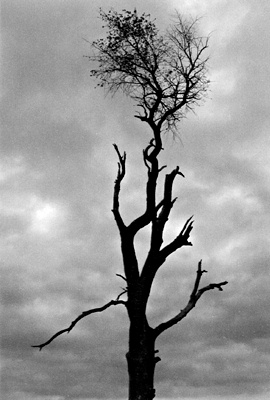
The Juniper Tree By The Brothers Grimm
Who is to say
that a mother
and her son
cannot be one?
The constant competition
between woman and woman,
mother and daughter,
is nowhere to be found
between and mother
and her son.
Take, for instance,
Mary and her Son.
You may have heard of them.
Previously untainted,
Mary allowed her body to give life to another,
all in the name of inspiring billions
and fame forever.
Is this truly selfless?
Upon further inspection, one realizes
many women
have committed more
in the name of their sons
for less.
A woman had a son and promptly died,
as they do.
Her husband remarried a buxom blonde,
Anna Nicole, nee Smith.
(not really, but for the purposes of this poem.)
She brought her own daughter,
not too bright, but well-known on the pageant circuit.
Her new husband,
the son’s old father,
was too infatuated to see her faults,
as he so often is.
By and by, the son’s father left to house
for a locale of no importance,
save for its distance from his new wife,
and the stepmother, sensing an opportunity,
slammed a chest on her new son’s neck,
divorcing head from toe.
She gingerly placed the head back on the neck,
as a young girl with a broken Barbie,
and left the body in the way of her biological daughter.
Her biological daughter, a dolt and klutz,
fell literally, shamelessly for the bait as she tripped over
her brother and his head rolled into the next room.
Devastated by what she thought was a result of her own clumsiness,
a notion which her mother did naught to dispel,
the daughter and her mother concocted a plan to cook the boy and feed him
a l’orange
with pureed potatoes
and greens-
a Jon-Benet type,
as you do.
By and by, the hapless trope returned home
and devoured his dinner:
a tad gamey, but the raspberry sauce did wonders to offset the texture.
His son, of whom only bones remained,
somehow mustered up the strength to transport his spirit
from his bones, buried by his remorseful sister under a juniper tree (!!) in the manicured lawn
into the body of a bird perched atop it
unbeknownst to his intellectually challenged sister,
who was crying too hard to take note of anything,
his stepmother, who was taking pills (she was Anna Nicole Smith, lest you forget),
and his hapless father,
who was a trope.
By and by, the forward thinking son,
who, kindly remember, was now a dove,
flew singing through the Olde German sky
to where a goldmaker (goldlayer, goldman?) (Goldman Sachs) (job in gold)
heard his song and stepped out of his (gold factory) to hear the song:
my mother she killed me, my father he ate me, my sister she buried me under a tree.
Enchanted by this dove’s lyrical prowess and mastery of the German language,
threw a gold chain at the bird, as you do,
and the bird strung it around his neck and jauntily flew off,
as well as any bird can with a gold chain around its neck.
Before lunch,
the bird had sung to and impressed a group of shoemakers, who gave the dove some shoes,
as you do,
and a miller, who gave the bird a millstone,*
*(a heavy stone that can be carried by a dove—the Grimms lived in a different time)
which the bird hefted back to the titular tree
on his well-manicured lawn
outside the house in which his family sat
watching TV.
The bird sang his song:
my mother she killed me, my father he ate me, my sister she buried me under a tree.
The father, so enraptured by this beautiful music, went outside
and returned with a gold chain around his neck, singing the praises of the beautiful song bird who bears gifts.
The bird sang again, and the daughter, wanting to see
if what her stepfather had said was true,
went outside and came back with a pair of shoes.
The stepmother
(remember, she is the only one who understands the significance of this song)
was so disturbed that she ran outside to put an end to the singing,
only to be met by a millstone crashing down upon her head, killing her
and taking a burden off of the dove’s shoulders, as it is a challenge for a dove to carry around a stone heavy enough to kill a women.
The dove
turned back into a boy
reunited with his father
rejoiced with his sister
danced on the grave of his stepmother
brought his mother back to life
went to Harvard Law School
invented a new kind of Cheeto
married a woman who was Asian and Russian and smart and beautiful and funny
as you do.
Similar Articles
JOIN THE DISCUSSION
This article has 0 comments.
Directly inspired by Anne Sexton's Transformations, in which several classic fairy tales are reexplored and peppered with modern references and themes common in Sexton's poetry, this poem takes a story she does not utilize in her book (The Juniper Tree, by the Brothers Grimm) and retells it in a method similar to Sexton's, but with 2016 sensibilities and humor in mind.