All Nonfiction
- Bullying
- Books
- Academic
- Author Interviews
- Celebrity interviews
- College Articles
- College Essays
- Educator of the Year
- Heroes
- Interviews
- Memoir
- Personal Experience
- Sports
- Travel & Culture
All Opinions
- Bullying
- Current Events / Politics
- Discrimination
- Drugs / Alcohol / Smoking
- Entertainment / Celebrities
- Environment
- Love / Relationships
- Movies / Music / TV
- Pop Culture / Trends
- School / College
- Social Issues / Civics
- Spirituality / Religion
- Sports / Hobbies
All Hot Topics
- Bullying
- Community Service
- Environment
- Health
- Letters to the Editor
- Pride & Prejudice
- What Matters
- Back
Summer Guide
- Program Links
- Program Reviews
- Back
College Guide
- College Links
- College Reviews
- College Essays
- College Articles
- Back
Fatal Insight
Under the sunlit sky the plants were blooming, the trees were blossoming, and the tribesmen were joyful; believing they had pleased God through humanly methods. For this was a peculiar society in which God was lionized and adulated; where the slightest of peculiar events was God’s act and coincidental coincidences could start exuberant festivals – or a series of funerals. In fact, this undeveloped tribe believed that their sole purpose of their very own existences was not to pass on their genes or enjoy animated existence but to exalt God above all else. Favorably, religion had unified the people and granted harmony to farmers, traders, and kings alike. The evils of human nature were kept in check by the threats of Hell and punishment, demoralizing their unjust intentions. Destitute families were confident of the good graces of God to provide for them; and when it did not, they just prayed harder, worshiped more, or devoted more time. Rituals were commonplace in the wake of coincidental good omens during which the women danced, the men sang, and the children frightened back by the sight of death. For the rituals were not just joyful ceremonies, but also places of gruesome sacrifice. They did not sacrifice mere peasants, for that was too simple for their God. Instead, their tribute of choice was invariably the high priest. In theory, the priests would have been happily sent to please God and the past deceased kings in Ionia, the afterlife but in practice the result was a gradual accumulation of preplanned deaths.
In the midst of false religion and doctrines May stood as a Month of Sacrifice. And it was in this bitter month that Yupanqui began questioning the repetitiveness of his tribe’s traditions. For when his virtuous son Johann was sacrificed on the 1st of May the extended winter did not end like predicted, it continued into June and cruelly decimated the underprivileged farmers. Nevertheless the undeniable failure of religion had the tribespeople resorting to excuses for their infallible God. Pondering this Yupanqui was drawn from being a just a redundant follower into an individual with a sense of rebellion. It finally gave Yupanqui the mental freedom to think outside of the box. He allowed himself to think defiantly for once, searching for redundancy in society’s traditions. In all of Yupanqui’s seemingly endless life he had never thought of beneficial, revolutionary ideas because back when he was young there had been no time for thinking, no time for skepticism or cynicism. However, that lifestyle resulted in countless regrets of what he could have done now that old age allowed him to pause the distractions and think of ideas. No one even noticed Yupanqui anymore. The last of his family had been expended for God. Without an active body or an amiable personality he was soon classified as an anti-social grump by society. But this was an advantage for Yupanqui for now he was not deemed worthy to be sacrificed and killed, no longer pestered by needy peasants. The more Yupanqui contemplated his society the more doubtful he was. Yupanqui’s God had dictated right or wrong for mankind through spoken parables; but inversely, was Yupanqui’s God right, or wrong? How would mankind know if God was truly working for the people? And if he was, how was allowing Johann’s death bringing people closer to God? Yupanqui realized he needed external sources for answers. No longer could he keep listening to his tribesmen, for men who live in caves will never believe words about the sun or for this instance, words of a better society. Yupanqui recalled suspicious incidents that started happening just a few years ago. Periodic appearances of strange men with strange clothing bearing strange tools started to occur along with giant shiny beasts flying above, loud and unlike any other creature Yupanqui had known. Yupanqui deducted that somehow these strange men could control the incredible beasts. A thirst for knowledge temped Yupanqui, even without the trickery of serpents. While Yupanqui’s society scared off these unknown creatures with spears of sharpened stone, Yupanqui was busy trying to find ways of contacting the strange men without being banished by his own society as a traitor. For Yupanqui wanted to experience other cultures and embrace new ideas to improve his own civilization. It wasn’t because he knew that his traditions was wrong or morally unethical, he just questioned the usefulness of tradition. The yearning for learning was imbedded deep inside him. Yupanqui finally devised a plan through careful thought and consideration. After several months of observation he found that the strange men’s appearances were not at mere random timings but after deliberately set periods of time. Yupanqui, veiled in the shadow of night, hobbled out of the village and into the woods a few sunsets before the day he predicted the strange men were going to come. He made his way to an old hunting cabin that he used when he was younger. Unfortunately, after decades of withstanding nature, it had toppled over, with its rotting logs and bug-ridden roof. There was no choice but to walk back to his village before dawn and go on pretending nothing had happened. With his original plan thwarted and hindered by old age Yupanqui was unable to think of other options to achieve his goal. Without other options, Yupanqui tried to act composed as he hobbled out of his village in full view of neighbours on the morning of predicted appearance and patiently waited. Finally, when the strange men appeared one more in the afternoon and the massive beasts in the air arrived once again, Yupanqui readied himself. His village did not dare to initiate a fight. Carefully approaching them, he was swarmed by the strange men, who were flashing bright lights at him and yelling loudly syllables of gibberish. Yupanqui was quickly overwhelmed by all the foreign men and the foreign objects and the foreign sounds. For once Yupanqui got a good glance at the strange people. He noticed that they wore things even on their upper body and that many of the strange men were in fact females. Hands up in surrender Yupanqui was gently hustled into the woods by the men. Looking back Yupanqui saw the shaking heads as his fellow tribesmen witnessed the incident. For once, he had acted in disobedience to his tribe. He watched as the giant beasts in the air retreated away and out of sight. After an hour of being escorted in constant illegible chatter, Yupanqui and the strange men reached a campsite. Yupanqui was led into a shelter of some sort and shown different symbols. The sun starts setting and Yupanqui notices the making of a pit like the ones used for sacrifices back in Yupanqui’s tribe. He starts panicking at the possibility of being sacrificed and waves his hands in protest. A man dressed in green starts a fire in the pit with a click of a button on a small device and Yupanqui quickly forgets his worries of death. Instead, he leans in and examines the ingenious item. He realizes how primitive his own tribe had been, needing an hour of hard work to simply light a fire. Surprisingly, when the rest of the men gathered around the pit, the man dressed in green came bringing raw meat on thin, silver sticks and handed one to each of the men, including Yupanqui. With no more concern over sacrifice Yupanqui follows movement by movement over what the other men do and manages to cook a piece of delicious meat over the fire. Again, following action by action from the other men’s demonstrations, Yupanqui learns how to properly eat the scorching meat and is rewarded with a positive experience of taste that he had never experienced before. After Yupanqui was full, he gestures towards a strange object and Yupanqui is gingerly shown the gadget that had been flashing at him earlier. He recognizes himself in the magical screens as the old man in the middle of the crowd of young people. This apparatus he had been shown, this apparatus could capture moments as still time. He starts detecting other practices and technologies rapidly. A woman speaking in a device held up to the ear, a man wearing see-through material in front of his eyes, and a thin blade cutting through meat as if it were leaves. The time passed quickly as Yupanqui engaged in trying to communicate and learning more about those devices. Two hours after sunset Yupanqui is given a comfortable thick bag and without needing instruction, promptly gets in, settling in a deep slumber. The next day, a darker-skinned female arrived at the camp and immediately went over to Yupanqui, speaking to him. Astonishingly, Yupanqui found that the woman could fluently speak the same language as him.
As the men waited patiently the woman explained to Yupanqui that in fact, he was part of an uncontacted civilization and that there was a whole world outside of his tribe with advanced technologies and other languages. Yupanqui’s sixty year-old brain was utterly consumed with questions about absolutely everything. Hours went by. Even the most intrigued men were left in the dark as the pair talked. Food was left untouched, excretory system ignored, and the sun forgotten about. A whole day of nonstop conversation evolved from the woman talking about the outside world to Yupanqui talking about his tribe’s culture to the familiarization of technology to Yupanqui. Eventually, both the uncivilized human and the civilized human succumbed to human instinct and stopped to eat food. Following dinner, the woman went over to report to the men at the camp while Yupanqui was left alone to mull over his newfound knowledge.
“They call themselves the Noctaire, and the old man’s name is Yupanqui,” said the woman, “they have no knowledge of the outside world and their technology is very primitive.”
“Did you ask if he needed any medical attention or if he wanted to return to his village?” one man asked.
“No, he’s fine medically and he said his village probably won’t allow him to go back anymore,”
“Great. We’ll have to leave in a few days before we run out of supplies, so get as much info as you can out of him because we’re not allowed to take him with us when we leave.”
“We can’t just leave him here!” exclaimed the woman.
“Don’t worry; I’ll give him some lighters. There’s no way they won’t accept him back with those things in his hands,” said the man calmly.
“They will deem him as a traitor and sacrifice him as soon as he hands over the items. He’s going to die, Marcus.” said the woman.
“He’ll die anyway even if we are able to bring him back. He won’t be able to handle the modern world and the modern world won’t accept him either.”
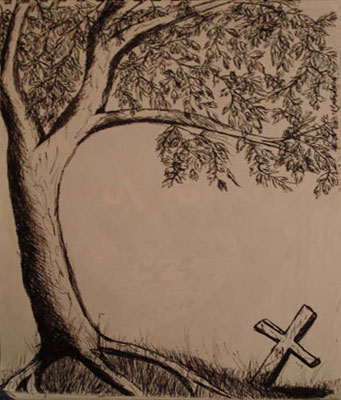
The woman nodded reluctantly and left to prepare for the night. Meanwhile, Yupanqui was in a mental battle inside of his mind. Even after being enlightened, Yupanqui was still loyal to his tribe, though he was ashamed of how uncivilized he was. Yupanqui’s conscience wanted him to go back to his village and educate them on the outside world, with its technology and culture, but Yupanqui’s rational part of the brain advised Yupanqui to not risk his life and try to inform his tribe of savages. At last, in his most controversial times, Yupanqui called upon his God for help like he was always taught to do. As Yupanqui prayed, no voice of God started speaking, no miraculous sign started appearing, and certainly no cure-all answer arrived. Just like when Johann was sacrificed or when his wife died from a disease. No God had ever given him a miracle. The only advice Yupanqui received was the truth of his own faith. Yupanqui realized the lack of response was not because God was unhappy or “not pleased with the people,” or “has an unexplainable reason,” For be it sacrifices, or rituals, or prayer; nothing will evoke God to do anything if God is not genuine. He realized all the unethical acts somehow justified by religion. If God was real, why would he allow us to keep doing such things? Yupanqui broke down in sudden revelation. He felt sympathetic for his culture. It didn’t matter if they didn’t have “cellphones” or “lighters,” it was because the very core of his civilization was a farce. Everyone was just following clueless tradition. He had experienced and learned about two radically different societies, one relying upon fictitious religion and another chaotic world relying upon technology without harmony. Finally, alone, he chose not to choose and abandoned his village for eventual destruction. He had eaten of the tree of knowledge, and this time, death replaced expulsion.
Similar Articles
JOIN THE DISCUSSION
This article has 0 comments.
The fateful combination of Kurt Vonnegut and Religious teachings allowed me to aspire to write this. I hope readers will understand the true complexion of today's society and human nature.