All Nonfiction
- Bullying
- Books
- Academic
- Author Interviews
- Celebrity interviews
- College Articles
- College Essays
- Educator of the Year
- Heroes
- Interviews
- Memoir
- Personal Experience
- Sports
- Travel & Culture
All Opinions
- Bullying
- Current Events / Politics
- Discrimination
- Drugs / Alcohol / Smoking
- Entertainment / Celebrities
- Environment
- Love / Relationships
- Movies / Music / TV
- Pop Culture / Trends
- School / College
- Social Issues / Civics
- Spirituality / Religion
- Sports / Hobbies
All Hot Topics
- Bullying
- Community Service
- Environment
- Health
- Letters to the Editor
- Pride & Prejudice
- What Matters
- Back
Summer Guide
- Program Links
- Program Reviews
- Back
College Guide
- College Links
- College Reviews
- College Essays
- College Articles
- Back
The Second Chance
The Second Chance
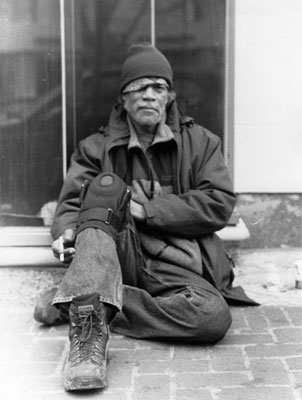
“Here,” I say, handing the homeless man a bag of Applebee’s ToGo that I had brought for him.
“Thank you,” the homeless man says. He opens the bag, and takes out the white foamy box with mozzarella sticks inside. His hands look dark and dirty against the white surface of the box.
Although I can tell that he’s terribly hungry, he takes his time with one mozzarella stick that is in his hand. With the other hand, he pats the space beside him.
“Come on over here,” he says.
I have never sat by him, not in the two years that I’ve fed him, and no way am I going to start right now.
“Oh, no, thank you.” I tell him, and stay standing. “I’d rather stand.”
“Eh,” he says, looking at my feet. “Must be painful for you to stand on those heels of yours.”
I smile politely. He smiles back, and I can see several teeth missing. I don’t know why I’m still standing here, but when I am about to tell him that I need to leave, he interrupts me.
“You know, you really look just like my wife. Same build, same black curly hair, same eyes. Very beautiful, that one little lady. But you’re a lot taller. Could be because of your heels.”
“Thank you,” I say. I feel awkward, and I can see that he realizes that he had made me feel awkward. He scratches his balding head and tufts of loose hair end up in his hand. He shakes them loose.
There is long pause. Just as I turn, ready to leave, he stops me again.
He had never talked to me—he would just say thank you and I’d just leave. I turned, confused and curious.
“Have I ever told you how I became homeless?” he asks me. I shake my head no. He laughs earnestly, and says, “Here, let me tell you…”
Sweat beaded on his forehead, but he wiped it away with one swipe of a towel.
It was very hot that day, which meant that the factory would be extra hotter than normally would have been. He sighed, and stretched his back. It popped a several times, and it felt good.
“Samuel?” his boss called out. “There’s someone on the phone for you.”
He quickly finished his work, stopping the flow of pencils that needed his inspection, and hurried to the phone.
“Hello?” he asked.
“Hey, Sam,” his wife said. “I feel really sick.”
“The doctor said to expect that, since you just started chemo,” Sam said.
“I mean not good as in worse than normal. I think that I might need to go to the hospital.”
“What? Right now?”
“I think I’ll be okay until you finish work.”
His face scrunched up in worry. “I’m going to leave work and pick you up. We can’t afford to call the ambulance.”
“No, no. I can wait until you finish up.”
“I’m sure the boss will understand,” Sam said. “I’ll see you in a few.”
“No—” his wife protested, but he hung up before she could finish her sentence.
“Boss!” he called. “Josephine isn’t feeling good, and I have to take her to the hospital. Can I leave?”
His boss hesitated. “You know that we need to lay off some people, and you leaving before your work is done doesn’t make you look good.”
“I know,” Sam said. “But my wife is important.”
“How was your wife?” I ask. “After you dropped her off at the hospital, I mean.”
His dirty face turns into a frown. “My dear Josephine couldn’t be saved. The cancer—ovarian cancer—spread too quickly. But she needed a lot of pain medicines, and soon she was stuck in the hospital. I worked hard to get the money to pay for the medicines, but one day…”
“Hey, Samuel!” his boss called out. Come to the office.”
He stopped the flow of pencils, and jogged to the office.
“Sit down,” his boss instructed, gesturing to the chair in front of his desk.
Sam sat down. “Why did you want to see me?”
“As you know,” the boss said, “there is a layoff to do. Seeing that everyone else didn’t leave their work early, or arrive late as much as you, I’m afraid that I’ll have to tell you…You are laid off.”
“What?!” Sam cried. “But…but you know the situation with my wife—she needs me! We need the money for all the hospital bills and—and—”
“I know,” the boss interrupted. “But it’s not fair if others work as hard as you and doesn’t miss or arrive late to work, and they get laid off. They would complain. They would cause a riot, or something like that. I want to try to keep this as peaceful as possible.”
“But…”
The boss smiled sadly, and said, “Gather your things and leave.”
It was very easy for Sam to leave his job. There was nobody for him to say goodbye to, no fond memories of the place. Sam regretted the times that he had kept to himself, and in the end, he didn’t have their friendship.
Sam left, downtrodden with worry.
“Why didn’t you apply for FMLA help? They would have helped you.” I am sitting next to him, and I can smell the acrid scent of body odor. It makes me want to vomit. I’m careful to not touch him.
“What’s FMLA?” he asks.
“Family Medical Leave Act. Not many people know about it. FMLA helps those people who have family member that is sick, or is sick himself, so when one informs FMLA of the situation, FMLA will make sure that you still have your job—in the meantime using up your sick leave with pay. When that runs out, you can still miss work, but without pay. The job would still be there for you, and when the situation is over, you can go back to your job.”
“I didn’t know,” he says. “I tried all I could, but she died not long after. One thing I was very disappointed in me was that I failed to meet her last request.”
“What request?” I ask, getting more and more curious.
“Request to find our daughter.” He says, and I could see the sadness in his face. I nod my head, encouraging him to continue with his story.
Sam went to the hospital, and visited his wife.
“Guess what?” Sam said.
“What, dear?” Josephine’s light mocha skin was very pale that she looked like a black-haired white woman, not the strong Mexican woman that she truly was.
“I got vacation time granted by my boss,” he lied, “and I can just simply stay with you every day for a couple of weeks.”
She smiled. “That’s good news, Sam. But I don’t want you to stay with me every day—instead I want you to find our daughter.”
“I don’t know,” he hedged. “I mean, we gave her up a long time ago, and I don’t think that I can find her in time.”
“Sure you can.” Her weak voice didn’t downplay the strong trait that she had. “We only gave her up twenty-three years ago. We should contact the Hope Adoption Agency and see what happened to her.”
He sighed. “For you, Josephine, I will try.”
“Hope Adoption Agency?” I ask. “Strange, because that’s the agency that got me adopted.”
“That’s the agency where we gave our daughter up. We couldn’t afford to keep a young ’un, and we just wanted the best for her.”
I nod my head. “What happened next?”
Sam searched and searched for their lost daughter. He contacted Hope Adoption Company, explained his reasons, and they were friendly enough to give him the parents that adopted his daughter.
But when he contacted the parents, they didn’t feel comfortable giving him the daughter’s number or address. They did give him her name and the workplace, although.
So Sam searched on the internet to find her, and got the mailing address of the clothing company that she was working for.
Then Sam contacted her—
“Wait,” I say, stopping Sam, the homeless man, “What was the daughter’s name?”
He smiles in affection. “Alyce. Alyce Sidansky.”
Shocked, my jaw drops. I can feel my jaw hanging open and I quickly close them. In shaky voice, I tell him to continue.
Then Sam contacted her, and waited a few days, but she didn’t respond. So he tried again.
Time was running out. Josephine’s health was deteriorating fast, and the doctors predicted that she wouldn’t be alive come this Christmas.
Finally, Alyce responded. But it wasn’t what Sam expected. Sam could remember every sentence in the e-mail. The e-mail read:
Hello, Sam.
I am sorry to hear about your wife. But I don’t think that it would be a good idea to meet you. I have my own parents; real parents, unlike you and your wife. They took care of me, raised me, and watched me grow up. They kissed my cuts and bruises when I was a kid, they scolded me when I was devious, and they shared my special moments while growing up. They are my true parents. I don’t want to meet you—not when you could have kept me and raised me. I hope that your wife would feel better soon.
—Alyce
Barely a week after the letter, Josephine died.
Sam grieved, debts piled up with no money to pay for them, and four months after Josephine’s death, Sam was evicted and his new home was on the streets.
I recognize the letter—it is familiar.
It should be familiar, because I wrote it.
Guilt wells up in my chest, and my heart breaks when I see what my careless words have done to the homeless man—my real father—who had done nothing to deserve what I had wrote to him.
“Oh, I’m sorry,” I cry, placing my hands on my forehead.
“Why would you be sorry?” the homeless man—my father—asks.
“Because I’m her.”
“You’re her? You mean…?” his face becomes hopeful.
“Yes, I’m Alyce Sidansky. I’m your daughter.”
Similar Articles
JOIN THE DISCUSSION
This article has 0 comments.