All Nonfiction
- Bullying
- Books
- Academic
- Author Interviews
- Celebrity interviews
- College Articles
- College Essays
- Educator of the Year
- Heroes
- Interviews
- Memoir
- Personal Experience
- Sports
- Travel & Culture
All Opinions
- Bullying
- Current Events / Politics
- Discrimination
- Drugs / Alcohol / Smoking
- Entertainment / Celebrities
- Environment
- Love / Relationships
- Movies / Music / TV
- Pop Culture / Trends
- School / College
- Social Issues / Civics
- Spirituality / Religion
- Sports / Hobbies
All Hot Topics
- Bullying
- Community Service
- Environment
- Health
- Letters to the Editor
- Pride & Prejudice
- What Matters
- Back
Summer Guide
- Program Links
- Program Reviews
- Back
College Guide
- College Links
- College Reviews
- College Essays
- College Articles
- Back
Invisible Men
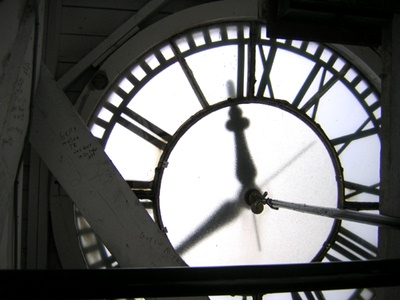
The Darkness hung deep in the sky as the Great Clock Tower of the 47th district struck 6 o'clock. Three great bells clashed from the belly of the black obelisk, the sound reverberating around every corner of the district, awaking the masses. Slowly but surely they rose, trained like dogs to follow the light from their murky huts and apartment graves. Save for the glow of the Clock tower, all was black. Neither sun, nor moon, nor stars guided the way. Those were scoffed at as myths for the melancholy; there was coal to mine and mouths to feed. By 6:15 all the people of the city and the surrounding countryside had convened at the Great Dining Hall beneath the clock tower for their breakfast. Indeed everything was Great, for it was made by the Great Council. Every building, every hall, every clock, every concept known to man, all except for the vile wretches who built and use them. The food inside was a maggot infested mixture of moldy bread and year old fruit. It took Great time for the food to come from the farming sectors, and it was the opinion of the Presidents that the Parasites, the official term for the inhabitants of the districts, should be grateful for every crumb they received. The rotten food left a pungent mixture of smog and mold in the room. Not that anyone cared, their nostrils were soot dark, scarred by years of breathing black dust and since infancy, hadn't smelled anything else. Bing! Another bell sounded. From their seats the parasites rose and stood before the Great Clock Tower awaiting the elevator for the Great Fall. The entire population positioned themselves in twenty rows by rank, exactly 20,000 every day, the Masters made all too sure of that. At the end of the first row, a peculiar boy of but two years of age stood out from among the rest. A look of unique childhood innocence lay on his face and a most remarkable white Spot only an inch in diameter, lay on his shoulder piercing the enveloping blackness. It was as plain and dull as any ordinary fabric but in contrast to the Darkness and the black clothes of himself and the others, it was as radiant as the mythical heavens. Whispers went out among the crowd from those who were brave enough to gaze upon the foreign light. It had been ages since a new child joined the ranks and the Spot was as alien as the celestial bodies of which the elders spoke. The little boy then gazed upon the Great black obelisk for the first time. By his estimation it must have been at least 1,000 feet tall, sleek black except for a massive, illuminated clock face at the top and three sets of ancient letters inscribed beneath it. Nearby, a gray haired elder 6 feet in length but with a head barely reaching 4 feet above the ground muttered under his breath, “The Greater Good.” Indeed they all knew the motto inscribed even though not a soul but him could read (reading, it was said, was beyond the scope of a coal miner's purpose). They had heard it since infancy, it was uttered at every meal, grace before and after, upon waking and before sleep. “The Greater Good,” the boy thought. He understood it as happiness, of the foreign pictures of majestic suns and glorious flowers from the books mommy hid in the trap beneath cupboard, for what else could good mean? The rest were far too jaded, far too knowledgable to be so naïve. The greater good, they knew, was the higher goal of another Great concept, Unity. Unity of the sectors. Their coal was shipped to the factory squares where it was used to manufacture the textiles and tools that would be redistributed to the farming sectors who would in turn send food back to the coal districts. Every sector had a purpose and the parasites were bred exclusively for that reason, no luxury was afforded for as the Presidents said, “excess to one man is poverty to another.” Bing! Another bell rang as the elevator reached ground level, the shepherd had spoken and like cattle the people gathered into the damp space, the doors closed and it plunged. Beneath, the boy and the workers slaved away, mining with bare hands, digging with naked feet. The boy breathed soot. Drank fire. He Whined. An overseer came. Slap! “Breath!” Bing! The elevator returned. The masses emptied. The boy was old. The Spot was gone.
It was a bright and crisp spring morning as the gilded pyrite bells of the St. Nick's old cathedral rang out across the suburban cityscape. Across the metropolis the bells searched, looking for listening ears, falling on deaf landscapes. It was but 6 am and not a sole lined the city's rustic cobblestone streets or perpetually manicured lawns, not even the pastor, for the bells had long ago been mechanized. So the bells' song solemnly returned to their creator, just as it had every day since the Age of Progress began, just as it always would; Progress never looks back. The 6th hour came and went in silence, then the 7th, by the 8th a self-superior runner or two dotted the park, but by the ninth they came. Jovial and Rotund they rose, armed with chrome plated phones and fur lined jackets, they flocked to their garages and ruby red cars, and out they went into the far off spring day. An awe inspiring bunch they were, car after car blazing down the street, each faster, stronger, brighter than the last, up highways, across boulevards. Breakfast was served between glass and silver, great heaping piles of heaven, varnished with gold leaf, oozing extravagance. On a television screen at one corner, the light tint of gold wrists distracted a few diners to the ceremony of an Armani clad presidential candidate celebrating victory. . “he really represents me,” said one diner, “a working class hero” said the other. Another television (the squat restaurant had a meager 30), was consumed by a face of gold laced blond hair and sleek seal skin, the hallmarks of a woman approaching 60. A now wealthy widow of a recently deceased entrepreneur was being celebrated for her undying charity. According to the telescreen, the principal source of all truth and news, she had given over a quarter of her paltry fortune to build a zoo, in order to “aid the most oppressed in society”. The two diners, in line with the rest of the restaurant, applauded, not a soul noticing the resentful disapproval of the invisible men that lined the room. Finishing their meal, the pair rose and walked, the dirty plates and cutlery vanishing, in their minds, into the thin air from whence they came. Outside they slipped a fraction of their pocket change to a marked stand and an invisible man rose. A moment later, seemingly from nowhere, their car appeared, just as pristine and untouched as when they arrived. “What makes these machines run?” remarked one. The other shook her head dismissively, “didn't you ever listen in school? Fuel in the engine propels the wheels forward.” “but who makes the fuel?” he returned, more inquisitive than concerned. Too late, the other, a learned professor, was too busy hawking at pearls in a window she had seen a thousand times before. He just sighed and drove home, all the while wondering what happened to plates after meals and why, oh why, the church's pure golden bells never rang. And across the Atlantic, between the Channel and the northern ice isles, invisible men slaved in smoke for Jovial and Rotund Presidents.
So their I stood at a fork in the road of humanity, two roads diverged in a broken path and a black smog protruding from their left. Revulsive and dark, the people were coated in slime and grime and filth and dust. Broken and battered, they bent under the vile hand of superiority, burrowing like moles in the darkness. Their smell was more pungent than poignant, but their hands, their cracked and withered hands, their hands which had grown black with coal and hard with grinding bone, these hands smelled of Egyptian Hammers, of Lebanese Axes, of Roman Shovels, of American Pickaxes, of work. The right was beautiful; crimson, draped in the freedom, clothed in wealth. But their self proclaimed feats of liberty and trials of democracy, for which they fancied and aggrandized themselves were not but glorifications of political monopolies born of economic ones. Their toils and struggles for bread over which they fessed and pleaded held its roots not in back-breaking labor but in wrists sore from cracking whips. So they grew fat and rotund in their wealth until like any plump grape left in the sun too long, they shriveled and dried into the dust from whence they came. Two roads diverged in a broken path, and I, I the unbeaten wilderness took.
Similar Articles
JOIN THE DISCUSSION
This article has 0 comments.