All Nonfiction
- Bullying
- Books
- Academic
- Author Interviews
- Celebrity interviews
- College Articles
- College Essays
- Educator of the Year
- Heroes
- Interviews
- Memoir
- Personal Experience
- Sports
- Travel & Culture
All Opinions
- Bullying
- Current Events / Politics
- Discrimination
- Drugs / Alcohol / Smoking
- Entertainment / Celebrities
- Environment
- Love / Relationships
- Movies / Music / TV
- Pop Culture / Trends
- School / College
- Social Issues / Civics
- Spirituality / Religion
- Sports / Hobbies
All Hot Topics
- Bullying
- Community Service
- Environment
- Health
- Letters to the Editor
- Pride & Prejudice
- What Matters
- Back
Summer Guide
- Program Links
- Program Reviews
- Back
College Guide
- College Links
- College Reviews
- College Essays
- College Articles
- Back
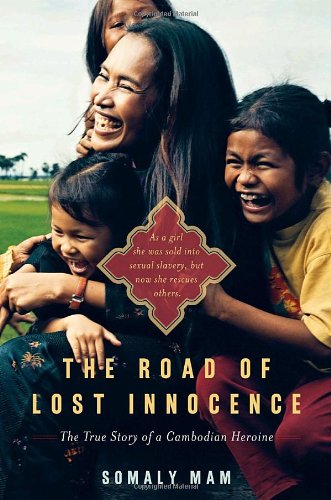
The Road of Lost Innocence by Somaly Mam MAG
“I dedicate this book to the thousands of little girls who are sold into prostitution every year.”
– Somaly Mam
Human trafficking is not an easy topic to address. People are definitely aware it exists, but it isn't publicized the way poverty and drug abuse are. But Somaly Mam not only to writes about it, but also describes her experience as a forced sex trade worker.
Somaly was orphaned as a child and lived with a group called the Phnong in a small village in Cambodia. Eventually, a man arrived and offered to take her from the village, telling her to call him “grandfather.” She eagerly went, thinking he would help her find her parents. But Grandfather made her his personal slave, having her cook his meals, draw water from the well, and earn money for him to gamble. If she didn't make enough money, he beat her. Grandfather also did many horrible things to her, including hitting her, tying her down, and molesting her. When she was 14, he married her off to a soldier who treated her the same way. When Somaly's husband didn't return from battle, Grandfather sold her to a brothel where she was forced to have sex; if she resisted, she was horribly punished.
Somaly eventually escaped by marrying a Frenchman. After moving to France for a few years, she returned to Cambodia and was startled by how terrible the trafficking situation had become. Parents were knowingly selling their children into prostitution for money, and the police were the brothel's main clients.
Somaly wanted to help these girls because she understood their pain. So she started an organization called AFESIP (Acting For Women in Distressing Situations), and brought young prostitutes to shelters to help them rebuild their lives.
This memoir is beautifully written, using simple yet powerful words that make readers think. Somaly Mam's pain is evident through her words, but her purpose is clear: she isn't writing her story to gain sympathy or pity, but to give the thousands of young women in the sex trade a voice. In spite of the book's serious and sensitive topic, Mam manages to create hope. The fact that she was able to get out and help others is inspirational.
This book haunted me. I had heard about human trafficking, but nothing could have prepared me for the emotions I felt reading a victim's account. Sex is supposed to symbolize love and intimacy, but for millions of girls around the world, it only means violence and punishment.
I definitely recommend this book. It will give you a glimpse into a world that is hidden behind closed doors. People need to know about human trafficking so that something can be done to end it forever.
Similar Articles
JOIN THE DISCUSSION
This article has 3 comments.
i am very interested to read this book! it sounds very hardcore and extremely engaging as a book. you described it well.
could you please read my Cyrano de Bergerac review? it's under my name. thanks and keep writing! :)
Somaly Mam, the celebrated Cambodian anti-sex-trafficking activist who, according to a recent Newsweek expose, newsweek.com/2014/05/30/somaly-mam-holy-saint-and-sinner-sex-trafficking-251642.html
fabricated her entire life story and those of the alleged victims she advocated for. The revelations have disillusioned many of Mam’s loyal supporters and left the press looking gullible. Just as importantly, they’ve highlighted the public’s seemingly insatiable desire for heroic narratives—and the willingness of many in the media to trick the public and provide them even if they are fake.
News reports:
cnn.com/2014/05/30/world/asia/cambodia-sex-slavery-foundation-hero-resign/
newsweek.com/2014/05/30/somaly-mam-holy-saint-and-sinner-sex-trafficking-251642.html
Not only had Somaly Mam not been an orphaned trafficking victim – she grew up with both parents and graduated from high school – but she also forced, encouraged, coached and paid girls to lie as well. One of these girls was Long Pross, who, actually lost her eye to a tumor and was sent to Afesip for vocational training. The same was reportedly true of Meas Ratha, a teenager allegedly coached by Mam to say she had been trafficked when in fact she was sent to Afesip by an impoverished farming family. These two girls were never prostitutes and never forced sex trafficking victims! -Neither was Somaly Mam. DON'T BE FOOLED !!
Here are some good websites about this:
bebopper76.wordpress.com/
humantraffickingstatistics.wordpress.com/
lauraagustin.com/
policeprostitutionandpolitics.com/
theatlantic.com/international/archive/2014/06/somaly-mam-scandal-victims-can-lie/372188/
newsweek.com/2014/05/30/somaly-mam-holy-saint-and-sinner-sex-trafficking-251642.html