All Nonfiction
- Bullying
- Books
- Academic
- Author Interviews
- Celebrity interviews
- College Articles
- College Essays
- Educator of the Year
- Heroes
- Interviews
- Memoir
- Personal Experience
- Sports
- Travel & Culture
All Opinions
- Bullying
- Current Events / Politics
- Discrimination
- Drugs / Alcohol / Smoking
- Entertainment / Celebrities
- Environment
- Love / Relationships
- Movies / Music / TV
- Pop Culture / Trends
- School / College
- Social Issues / Civics
- Spirituality / Religion
- Sports / Hobbies
All Hot Topics
- Bullying
- Community Service
- Environment
- Health
- Letters to the Editor
- Pride & Prejudice
- What Matters
- Back
Summer Guide
- Program Links
- Program Reviews
- Back
College Guide
- College Links
- College Reviews
- College Essays
- College Articles
- Back
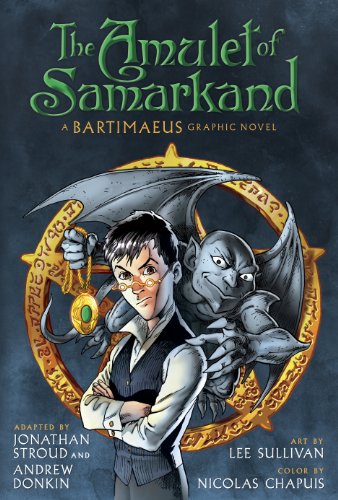
The Amulet of Samarkand by Jonathan Stroud
When you read little kids’ fairy tales, like Aladdin, you will find that djinnis (genies) are friendly creatures who will grant you three wishes. Well welcome to modern-day London, a city controlled by scheming magicians and their imps. Young Nathaniel is training to be magician when he summons Bartimaeus, a sly and cunning djinni who will do anything to escape Nathaniel’s power. While under Nathaniel’s power, Bartimaues has to help Nathaniel survive and stick his nose into others’ business. Will Nathaniel be able to control Bartimaeus? A plot full of murder, adventure, and magic tells this amazing, magical story. The book The Amulet of Samarkand, by Jonathan Stroud, is sure to please any reader looking for a story that takes you into another wonderful world.
The Amulet of Samarkand, by Jonathan Stroud, is the thrilling first installment in the Bartimaeus Trilogy. The exciting story starts out when the young magician-in-training Nathaniel, who has mastered spells way beyond his years (which his master does not know, thus treating him like scum), attempts (and succeeds) to summon the powerful djinni Bartimaeus. Nathaniel uses the Bartimaeus to steal the all-powerful amulet of Samarkand from the scheming magician Simon Lovelace. Unfortunately, things go completely wrong when Bartimaeus and Nathaniel start snooping around the magical world to find out more about Lovelace and why he had the amulet. Only using the shape shifting Bartimaeus and the many planes of magic can Nathaniel stay alive in the dangerous magical world of London and stop Lovelace. What starts out as a simple plan for revenge by Nathaniel turns into the discovery of an evil plot to over through the government (run by magicians) and change the course of history forever. Will Nathaniel be able to expose Lovelace as the evil magician he is or will he become another one of the victims that Lovelace has inflicted pain and suffering on? You’ll have to read the book to find out!
The Amulet of Samarkand teaches an important lesson: meddling may give you some reward, but it usually ends in disaster. I got this as the theme because of how Nathaniel meddles in the book. When Nathaniel first starts tampering, he doesn’t know it. When Nathaniel eventually finds out what he was dealing with, he doesn’t stop. Because of this, Nathaniel looses something very special to him. However, as a result of Nathaniel’s interfering, his life changes for the better as well as for the worse.
If I could change something about this book, I would defiantly add a glossary in the back of the book. This is because The Amulet of Samarkand is about magic and magical creatures, which I found a little confusing and hard to understand. There are these different levels of magic called ‘planes,’ which I don’t really get. A glossary with the definitions of the planes and some descriptions of the magical creatures that are mentioned would be really useful for understanding this book. The story also has a lot of footnotes, which was also hard to read and understand. That is what I would change (add to) about The Amulet of Samarkand.
The Amulet of Samarkand is written from two points of view. Most of the time, you read the story in the first person from the Bartimaues’ point of view. Although, once in a while, there will be a chapter in the third person about Nathaniel. This really comes in handy because although Bartimaeus ‘works’ for Nathaniel, he leaves Nathaniel’s side quite a bit to go on missions. The way the author wrote the book (in terms of point of view) makes it really easy to understand where the characters are and what they are doing. You can read about Bartimaeus’ narrow escapes from evil magicians and then turn the page to read about Nathaniel’s battles with his cruel master. Overall, I really liked how the author structured the point of view.
All in all, The Amulet of Samarkand, by Jonathan Stroud, is a thrilling book filled with suspense and mystery that all fantasy-lovers should read. The story of Nathaniel will draw you into a new world where surprise (but always a good surprise) lurks around every corner. With the host of magicians and magical creatures, you won’t be able to but this book down. Out of five stars, I would give this book four-stars, because the book could be a little confusing to some people. So, for next time you’re daydreaming about a world where magic does exist, stop and wonder, what would you do with a powerful ancient djinni like Bartimaeus?
Similar Articles
JOIN THE DISCUSSION
This article has 3 comments.
“The temperature of the room dropped fast. Ice formed on the curtains and crusted thickly around the lights in the ceiling. The glowing filaments in each bulb shrank and dimmed, while the candles that sprang from every available surface like a colony of toadstools had their wicks snuffed out.” This is but one of the many wonderfully elaborate scenes of the Bartimaeus Trilogy. In the fourth paragraph, I explain more about this trait in the wonderful books that Stroud has cleverly written. I also like the fact that there were footnotes. In every chapter where Bartimaeus was present there would be little comments nestled in between every line.
The Bartimaeus trilogy is about John and the djinn Bartimaeus, as they do amazing things to save London from evil magicians. In the first book Lovelace (an evil magician) is plotting to kill the governor, Rupert Devereaux. In the course of the Bartimaeus Trilogy, many people try to overthrow the government. There are spies, assassins, and wizards, and most are against poor Rupert Devereaux…
The Bartimaeus Trilogy takes place in London a time far past 1936. In this trilogy there is a magician named John. John has to hide his birth name, Nathaniel, because demons could gain control over him with it. Demons have magical capabilities, which with your birth name; they could control your every footstep. In this trilogy there are five types of demons: (lowest to highest power levels) imps, foliots, djinni, afrits, and marids. Bartimaeus, one of the main characters, is a djinn. Demons are evil, and will hurt you if they can.
I found the Bartimaeus Trilogy engaging because the characters are always doing something important to the plot, and Stroud has us caring about what the characters do. It is like in a horror movie, when the characters are walking through the forest and the murderer is behind them. If you could tell the main character, you could. I would rate this series 4 ½ stars out of 5. I would rate it that because these are really good books, although there is nothing that explains who some minor characters are. 2 minor characters are Mr. and Mrs. Underwood, John’s mentors. All I know about them is that Mr. U is an old magician that apprenticed John, and Mrs. U is his nice wife.
I think Stroud composed his books very well together. I find it intriguing that Nathaniel isn’t allowed to tell anyone his birth name, and instead goes by John Mandrake.
I also liked the trilogy because Stroud explains the setting very well. He uses very precise words to describe, for example, “door, which was made of a dark, unpainted wood with many whorls and grains… The door swung open soundlessly on oiled hinges… A small window halfway down let in a friendly stream of sunlight.” There are many other scenes like that where his colorful wording dominates, like when he is in the streets of London after something dreadful happened to him. He resides in an old unused library, and by the way Sroud describes it, you almost feel as if you are there.
This trilogy is unique in many ways. It is unique because Stroud made masterpieces that make you feel compassionate for John, while the suspense makes you want to read on and on. The plot is thrilling, with enough action to make you feel fatigued when the chapter is over. In the whole trilogy you are switching back and forth between John and Bartimaeus, while their stories are entwined.
“The temperature of the room dropped fast. Ice formed on the curtains and crusted thickly around the lights in the ceiling. The glowing filaments in each bulb shrank and dimmed, while the candles that sprang from every available surface like a colony of toadstools had their wicks snuffed out.” This is but one of the many wonderfully elaborate scenes of the Bartimaeus Trilogy. In the fourth paragraph, I explain more about this trait in the wonderful books that Stroud has cleverly written. I also like the fact that there were footnotes. In every chapter where Bartimaeus was present there would be little comments nestled in between every line.
The Bartimaeus trilogy is about John and the djinn Bartimaeus, as they do amazing things to save London from evil magicians. In the first book Lovelace (an evil magician) is plotting to kill the governor, Rupert Devereaux. In the course of the Bartimaeus Trilogy, many people try to overthrow the government. There are spies, assassins, and wizards, and most are against poor Rupert Devereaux…
The Bartimaeus Trilogy takes place in London a time far past 1936. In this trilogy there is a magician named John. John has to hide his birth name, Nathaniel, because demons could gain control over him with it. Demons have magical capabilities, which with your birth name; they could control your every footstep. In this trilogy there are five types of demons: (lowest to highest power levels) imps, foliots, djinni, afrits, and marids. Bartimaeus, one of the main characters, is a djinn. Demons are evil, and will hurt you if they can.
I found the Bartimaeus Trilogy engaging because the characters are always doing something important to the plot, and Stroud has us caring about what the characters do. It is like in a horror movie, when the characters are walking through the forest and the murderer is behind them. If you could tell the main character, you could. I would rate this series 4 ½ stars out of 5. I would rate it that because these are really good books, although there is nothing that explains who some minor characters are. 2 minor characters are Mr. and Mrs. Underwood, John’s mentors. All I know about them is that Mr. U is an old magician that apprenticed John, and Mrs. U is his nice wife.
I think Stroud composed his books very well together. I find it intriguing that Nathaniel isn’t allowed to tell anyone his birth name, and instead goes by John Mandrake.
I also liked the trilogy because Stroud explains the setting very well. He uses very precise words to describe, for example, “door, which was made of a dark, unpainted wood with many whorls and grains… The door swung open soundlessly on oiled hinges… A small window halfway down let in a friendly stream of sunlight.” There are many other scenes like that where his colorful wording dominates, like when he is in the streets of London after something dreadful happened to him. He resides in an old unused library, and by the way Sroud describes it, you almost feel as if you are there.
This trilogy is unique in many ways. It is unique because Stroud made masterpieces that make you feel compassionate for John, while the suspense makes you want to read on and on. The plot is thrilling, with enough action to make you feel fatigued when the chapter is over. In the whole trilogy you are switching back and forth between John and Bartimaeus, while their stories are entwined.