All Nonfiction
- Bullying
- Books
- Academic
- Author Interviews
- Celebrity interviews
- College Articles
- College Essays
- Educator of the Year
- Heroes
- Interviews
- Memoir
- Personal Experience
- Sports
- Travel & Culture
All Opinions
- Bullying
- Current Events / Politics
- Discrimination
- Drugs / Alcohol / Smoking
- Entertainment / Celebrities
- Environment
- Love / Relationships
- Movies / Music / TV
- Pop Culture / Trends
- School / College
- Social Issues / Civics
- Spirituality / Religion
- Sports / Hobbies
All Hot Topics
- Bullying
- Community Service
- Environment
- Health
- Letters to the Editor
- Pride & Prejudice
- What Matters
- Back
Summer Guide
- Program Links
- Program Reviews
- Back
College Guide
- College Links
- College Reviews
- College Essays
- College Articles
- Back
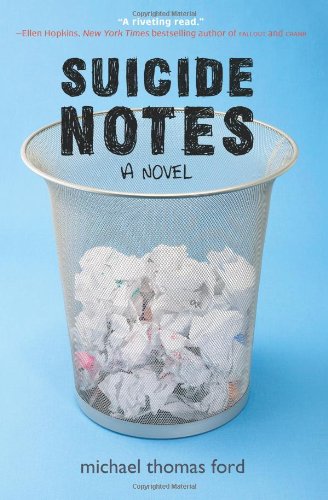
Suicide Notes by Michael Thomas Ford MAG
There is an invisible, metaphorical line that most young adult fiction chooses not to cross for fear of being overly explicit. This, however, is not true for Suicide Notes. The book draws the reader in immediately despite the unconventional subject matter.
Suicide Notes opens by introducing the world to the protagonist, a teenager named Jeff, who has been admitted to a mental hospital for attempting suicide on New Year's Eve. Ford takes the reader on a whirlwind journey through Jeff's eyes as he meets other kids with similar issues and deals with the psychiatrist who is trying to help him (whether Jeff realizes it or not).
The prose has the elegant-yet-aloof tone of a teenage boy and is a breath of fresh air in a literary world where all the characters are stamped from the same mold. Jeff's voice rings true and clear. It's entertaining to read the events through his mind. He has a unique way of looking at the world.
The novel, however, not only deals with the topic of teenage suicide, but also with the difficult, complex subject of sexuality. Ford depicts homosexuality, which Jeff struggles to come to terms with, as something normal and accepted, instead of unthinkable and foreign. Suicide Notes is able to make something beautiful from something normally regarded with hesitation or disdain.
Ford chose not to candycoat things most authors would. Instead, he shows them in their complex, awkward, taboo glory. This alone sets Suicide Notes apart from the majority of young adult fiction.
Suicide Notes is a ground-breaking, inspirational, gorgeously composed novel. While it's not intended for younger audiences, and though it contains the occasional bout of harsh language, I feel mature-minded people should give it a shot. It shows love and perfection, despite all faults, no matter who, or what, you are.
Similar Articles
JOIN THE DISCUSSION
This article has 3 comments.