All Nonfiction
- Bullying
- Books
- Academic
- Author Interviews
- Celebrity interviews
- College Articles
- College Essays
- Educator of the Year
- Heroes
- Interviews
- Memoir
- Personal Experience
- Sports
- Travel & Culture
All Opinions
- Bullying
- Current Events / Politics
- Discrimination
- Drugs / Alcohol / Smoking
- Entertainment / Celebrities
- Environment
- Love / Relationships
- Movies / Music / TV
- Pop Culture / Trends
- School / College
- Social Issues / Civics
- Spirituality / Religion
- Sports / Hobbies
All Hot Topics
- Bullying
- Community Service
- Environment
- Health
- Letters to the Editor
- Pride & Prejudice
- What Matters
- Back
Summer Guide
- Program Links
- Program Reviews
- Back
College Guide
- College Links
- College Reviews
- College Essays
- College Articles
- Back
Legally Blind MAG
Walking down the hallway at school, I hear a deep voice say, “Hi, Nicole.” As I turn to determine the speaker, all I see is a blur of graying hair and a dark shirt walking in the opposite direction. Although I could reach out and touch his arm, I can’t see his face.
“Hi,” I respond politely, hoping he won’t realize I don’t know who he is.
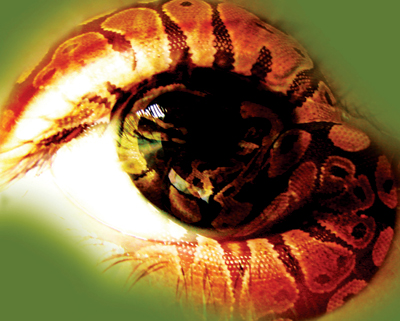
As a legally blind teenager, I routinely face obstacles that may seem like major challenges. I may need larger print or extended time on tests, but I am just like everyone else. When others see my enlarged worksheets or tests, they stare, and to the few who ask about them, I explain that I am legally blind. This doesn’t mean that I can’t see at all, but that my vision is worse than 20/200 and can’t be improved with corrective lenses. For example, a legally blind person with 20/200 vision has to be as close as 20 feet to identify objects that people with normal vision can spot from 200 feet away.
I was born with albinism, which means I have little pigment in my eyes, skin or hair. I am sensitive to light and squint a lot when I am outside, even with a hat. (I don’t wear sunglasses because they affect the little I can see.) I wear glasses for up-close work, but not for distance because they don’t help. In school I use a monocular, a small telescope.
People ask what my vision is like and I find it hard to describe because I don’t really know what theirs is like. I can see people’s faces when they stand four feet away, but without very much detail. I can read without glasses, but the text needs to be very close. When objects are near, I can see more detail.
I take part in extracurricular activities just like anyone, including dance and working with farm animals. I blend in and feel just like everyone else. Working with the animals makes me feel like an equal because I can do anything with them. Sometimes in class I prefer it if a teacher forgets to enlarge a paper because I feel normal. But then again, normal is overrated.
I don’t often get asked about my handicap because it’s not immediately obvious. I might not be able to drive a car, but I have had seven years of orientation and mobility training in how to read a map and travel by train, bus, or foot. I feel ready to take on the world even if I don’t get my permit.
It may seem strange, but I love to read. As a child, I was very shy and rarely talked to others, so I read books. My visual impairment doesn’t disrupt my daily routine much because I have learned to adapt. I have been very successful in school and when I am particularly challenged, I get in a I’m-never-going-to-give-up-even-if-it-kills-me mood and triumph over the challenge. Just because someone can’t see well doesn’t mean they are less determined to succeed.
Similar Articles
JOIN THE DISCUSSION
This article has 7 comments.
I once broke my glasses and had to go to school. I walked into someones locker that day...And fell down the stairs. You see, (No pun intended) without my glasses I lose sense of color because of the myopia. I can't even see the black writing on the white board. It's awful to me because of how athletic I am.
I truly admire you for how you handle being blind.
I don't know how hard it is for you, but I know that just my little sight impairment is hard enough.
Your last paragraph is amazing. It speaks to me. Best of luck in this world.
~ Swimming

0 articles 0 photos 12292 comments